Project walkthrough · Games, learning systems & full-stack development
Molly's Learning Arcade
A browser-based collection of educational games that combines interactive mechanics with a structured K–5 curriculum, skill progression, and learner-specific records.
Verified public product screenshot
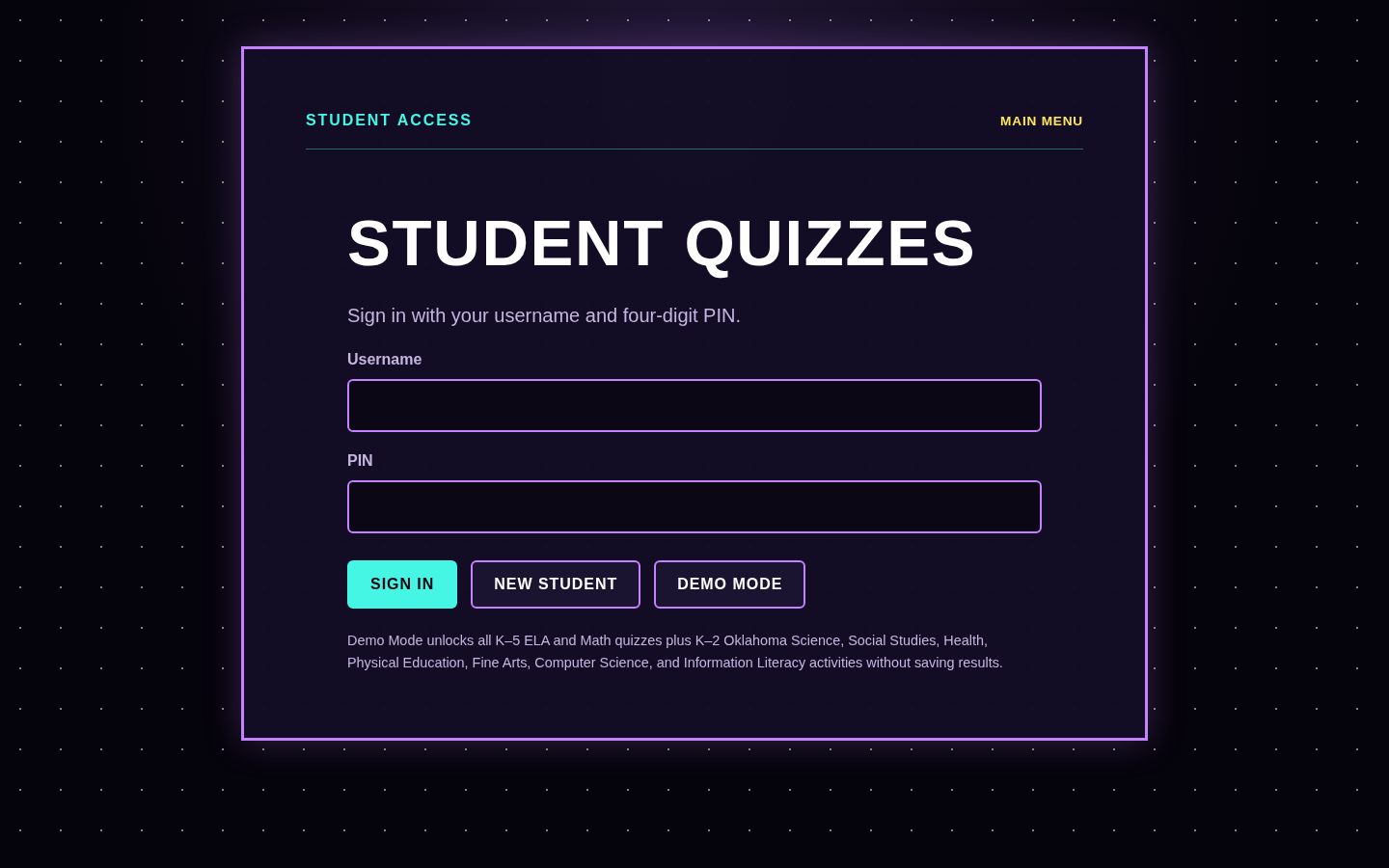
Explore the live game directly. A screenshot of the unauthenticated lessons interface appears above when the verified browser capture is present.
Why the design is more than a collection of games
The product separates immediate gameplay feedback from long-lived educational progress. A game can present a prompt or challenge, but the curriculum layer needs to track which standard or skill was exercised, the quality of the evidence, and when review is appropriate.
The repository includes distinct responsibilities for Phaser scenes and systems; React quiz/learning interfaces; curriculum application, domain, and infrastructure modules; and student identity and persistence. The source models question templates, attempts, skill evidence, diagnostic placement, mastery state, and review schedules.
Architecture and data flow
flowchart TD
  L[Learner browser] --> R[React lessons and quiz UI]
  L --> P[Phaser game scenes and systems]
  R --> A[NestJS API]
  P --> A
  A --> I[Student identity]
  A --> C[Curriculum application services]
  C --> D[Standards, questions, mastery policies]
  I --> DB[(PostgreSQL via Prisma)]
  C --> DB
This diagram is a conceptual grouping of source modules, not an assertion that every game scene makes each API call directly.
Important engineering decisions
- Game architecture: scene composition stays distinct from shared gameplay entities and systems, so new mechanics need not inherit Fossil Dig-specific implementation details.
- Curriculum as data: the system stores standards, question templates and attempt evidence separately from rendering, supporting multiple game experiences and evolving content.
- Student-aware progress: the API derives identity from signed learner authentication rather than trusting a caller-supplied learner ID.
- Mastery and review: evidence and review state are explicitly persisted, with adult-controlled mastery checks documented for the learning workflow.
- Verification: the repository includes Vitest, Jest and Playwright coverage, plus separate curriculum validation and simulation tooling.
Evidence in the repository
Phaser/React composition ↗ · Curriculum data and progress schema ↗ · Game architecture guide ↗
Technical descriptions reflect inspected repository source and documentation. No learner adoption, curriculum efficacy, or production uptime figures are claimed.